
Colloquia & Seminars
Department of Physics & Astronomy Colloquia and Seminars Series
2026 - 2027 Program
Virtual or R-150, Hilbun Hall, Mississippi State University
Fridays @ 3:00 PM
NB: Unless noted otherwise, Physics Colloquia/Seminars are held as mentioned above
- November 6th, 2026 Dr. Jamileh Beik Mohammadi, Department of Physics and Astronomy, University of Alabama
Title: Exploring Magnetization Dynamics Across Materials and Scales
Host: Dr. Lamiaa El Fassi
Instruction: In-person in Hilbun R-150
Abstract: Magnetic materials are central to technologies ranging from information storage and sensing to emerging computing platforms. Their functionality depends not only on their equilibrium magnetic state, but also on how that state responds, evolves, and switches when driven by external stimuli. Understanding these processes requires connecting microscopic interactions and material properties to magnetic behavior across different time and length scales. In this talk, I will show how a combination of magnetic measurements, microwave spectroscopy, and computational modeling can be used to uncover these connections.
- November 13th, 2026 Ms. Eva Godwin & Mr. Maruf Abubakar, Physics & Astronomy Department, Mississippi State University
Title: TBD
Host: Drs. Angelle Tanner and Jaspreet Randhawa
Instruction: In-person in Hilbun R-150
Abstract:
- November 20th, 2026 Dr. Ryan Wang, Department of Physics and Astronomy, University of Alabama
Title: TBD
Host: Dr. Lamiaa El Fassi
Instruction: In-person in Hilbun R-150
Abstract:
- November 27th, 2026 Thanksgiving Break. Be safe and enjoy :)!
- December 1st, 2026 End of Semester. Happy Holidays :)!
-
January 15th, 2027 Dr. Bob Hirosky, Department of Physics, University of Virginia
Title: Detectors in the Next Era of Large Colliders: CMS, the HL-LHC, and the Road Ahead
Host: Dr. Lamiaa El Fassi
Instruction: In-person in Hilbun R-150
Abstract: The discovery of the Higgs boson opened a new chapter in particle physics, but fundamental questions remain: What determines the properties of the Higgs field? What is dark matter? And where might new particles or interactions be hiding? The High-Luminosity Large Hadron Collider (HL-LHC) will expand our ability to address these questions through a vastly larger dataset—and will demand a major transformation of the detectors that record its collisions.
This colloquium will explore the upgrade of the Compact Muon Solenoid (CMS) experiment, emphasizing how new detector technologies translate into new physics opportunities. A replacement silicon tracker, precision timing detectors, a high-granularity endcap calorimeter, and upgraded crystal calorimter, trigger and data-acquisition systems will help CMS disentangle overlapping collisions, withstand intense radiation, and identify rare processes in an exceptionally challenging environment. Along the way, I will discuss the interplay between instrumentation and physics performance to sharpen measurement precision and extend searches for phenomena beyond the Standard Model. The talk will close with a brief look beyond the HL-LHC, towards CERN’s proposed FCC-ee collider.
- Past Colloquia/Seminars
- October 30th, 2026 Dr. Andre Sieverding, Space Science Institute, Lawrence Livermore National Laboratory
Title: Progress in nucleosynthesis predictions through simulations and nuclear data
Host: Dr. Jaspreet Randhawa
Instruction: In-person in Hilbun R-150
Abstract: Nuclear astrophysics is about connecting nuclear data with astrophysical simulations to astronomical observables and nucleosynthesis signatures. Progress on all sides continuously improves our understanding of the universe. On the one hand I will showcase how high-fidelity multi-D simulations of core-collapse supernovae improve our understanding of observational signatures. On the other hand, I will give examples of how nuclear physics affects predictions for the origin of heavy elements and how new astrophysical scenarios may challenge the picture of well-separated nucleosynthesis processes.
- October 23rd, 2026 Mr. Ishmael Apachigawo(*) & Mr. Dhruvil Solanki(**), Physics & Astronomy Department, Mississippi State University
Title: Light Localization and Vibrational Spectroscopy for Probing Structural and Molecular Disorder in Biological Systems
Host: Dr. Prabhakar Pradhan
Instruction: In-person in Hilbun R-150
Abstract: (*) Vibrational Signatures of Neurodegeneration: ATR-FTIR Spectroscopy and Line-Shape Analysis
Probing biochemical changes in neurological diseases, along with an accurate yet non-invasive way to quantify them, is essential to improve diagnosis. In this talk, I present Fourier Transform Infrared (FTIR) analysis using attenuated total reflection (ATR) to examine biochemical changes in neurodegenerative diseases. This study applies developed ATR-FTIR techniques to characterize spectral differences among serum from five mouse cohorts with different genetic lesions. We analyze our ATR-FTIR data by comprehensively examining spectra rather than relying on a single biomarker, using an integrated panel of established exploratory analyses and interpreting results with consideration of each genotype's distinct molecular composition. In this presentation, I will talk about how the Rényi dimension helps us capture and quantify spectral heterogeneity through multifractal dimensional analysis of singularity f(𝛼) across the fingerprint region. I will outline the results and explain significant changes in protein secondary-structure composition, track specific lesions such as amyloid, tau, and alpha-synuclein, and assess start equation kinase activity relative to WT. AS an exploratory analysis, we ground our interpretation in a physics-based conformational free-energy bias of the serum protein ensemble.
(**) From Light Scattering to Structural Disorder: Probing Biological Complexity and Disease Processes with Optical Physics
Understanding how light scattering responds to nanoscale structural changes in complex tissue is an important goal of biomedical optics. This talk focuses on partial wave spectroscopy (PWS) and inverse participation ratio (IPR) analysis as two optical approaches to probe structural disorders at the tissue and molecular levels, respectively, beyond the resolution of conventional microscopy. Using brain tissue from the 5xFAD mouse model of Alzheimer’s disease, we observe increased optical disorder compared to non-transgenic controls. Behavioral and histological assessments independently validate disease-associated alterations. I will outline the physical principles underlying PWS and IPR, the specific structural insights each method yields, and how these measurements relate to supporting observations. Finally, I will introduce the Fourier transform PWS (FT-PWS) as a prospective approach for analyzing refractive-index fluctuations across multiple length scales, to probe the hierarchy of contributions across these scales and their significance.
- October 16th, 2026 Dr. Huong Nguyen, Department of Physics, University of Virginia
Title: Precision Measurements of the Proton Charge Radius and Weak Mixing Angle using Elastic Electron Scattering at Jefferson Lab
Host: Dr. Dipangkar Dutta
Instruction: In-person in Hilbun R-150
Abstract: Advancing our understanding of Quantum Chromodynamics (QCD), particularly in the non-perturbative regime through studies of nucleon structure, and conducting stringent tests of the Standard Model (SM) by probing electroweak interactions through parity-violating asymmetries are among the main goals of the nuclear physics program at Jefferson Lab. This talk will focus on two experiments at Jefferson Lab that use elastic electron scattering as a clean and effective method for probing fundamental physics. The PRad-II experiment uses elastic electron-proton scattering at unprecedentedly low momentum transfer to precisely determine the proton root-mean-square charge radius, one of the fundamental quantities characterizing the structure of the proton. The MOLLER experiment uses parity-violating asymmetries in elastic electron-electron scattering to make a high-precision measurement of the weak mixing angle at low energy, providing a stringent test of the electroweak sector of the SM and its energy-scale dependence. The physics goals, experimental techniques, key features of the detector subsystems required to achieve the stringent experimental precision, and the current status of these two experiments will be discussed.
- October 15th, 2026(*) Dr. Prasanta Kumar Datta, Department of Physics, Indian Institute of Technology Kharagpur
Title: Experimental Methods of Ultrafast Science
Host: Dr. Prabhakar Pradhan
Instruction: In-person in Hilbun R-350
Abstract: The origin of electronic and optical properties of materials is a complex interplay among lattice, electronic, and spin degrees of freedom that generally occur on timescales ranging from 10−18 to 10−9 s (or longer). With a revolutionary technological improvement in ultrafast lasers, shorter time-domain pulses with broader bandwidth are now available for high-resolution ultrafast spectroscopic techniques. Experimental time-resolved optical techniques to characterize the dynamic properties of photonic, electronic, and magnonic systems on the femtosecond time scale have transformed our understanding of these materials. In this talk, I will discuss a few techniques that enable us to measure quantities such as ultrafast electron decay pathways, spin dynamics, and the absorption of low-energy quasi-particles. I will discuss the development and experimental intricacies of Transient absorption spectroscopy (TAS), Fluorescence up-conversion spectroscopy, time-correlated single-photon counting, THz time-domain spectroscopy (THz-TDS), and time-resolved magneto-optical Kerr Effect (TR-MOKE), along with representative data published in recent years.
References:
1] Physical Review B 107 (7), 075429 (2023)
2] Physical Review B 103(7), 075437, (2021)
3] Physical Review B 104(7), 075446, (2021)
4] Applied Physics Letters 120 (2), 021101 (2022)
5] Advanced Optical Materials 13 (7), 2402608 (2025)
6] Scientific Reports 9, 12138-12146 (2019)
7] IEEE Journal of Quantum Electronics 57 (1), 1-8 (2020)
8] Nanoscale 18 (10), 5482-5495 (2026) 9] Small, (2026), e74870. https://doi.org/10.1002/smll.74870
(*) This is a special colloquium; please note the different date and location!
-
October 9th, 2026 Fall Break. Be safe and enjoy :)!
- October 2nd, 2026 Dr. Garth Huber, Department of Physics, University of Regina
Title: Electron Scattering and Hadron Structure
Host: Dr. Wenliang (Bill) Li
Instruction: In-person in Hilbun R-150
Abstract: One of the fundamental challenges of modern physics is that we only poorly understand how the observed properties of the building-blocks of nuclear matter (nucleons and light mesons) are derived from the interactions of their quark-gluon constituents. As a result of the motion of the quarks (which produces magnetism) and their electrical charge, the nucleons and mesons are expected to exhibit a distinct structure, which should be derivable from the underlying theory of the strong interaction, Quantum Chromo-Dynamics (QCD). Precision electron scattering experiments play a critical role in this description, as these measurements provide important information about the internal structure of these particles. In this talk, I will present a survey of the recent experimental progress on the electromagnetic structure of nucleons, kaons, and pions.
- September 25th, 2026 Dr. Kenny Wunder, Department of Economics, Finance, & Legal Studies, The University of Alabama
Title: Defining Moments: Taking Physics into the Social Sciences
Host: Dr. Donna Pierce
Instruction: In-person in Hilbun R-150
Abstract: In this talk I share my experience moving from physics into the social sciences. My aim is to help you see what you have really been learning as a physics student and how that training applies well beyond the context of physics. I will discuss other career options available to you, why these alternative pathways may be worth your attention, and how you can take advantage of the skills you have already developed to set out in a direction you may not have considered. Along the way I will describe what research in the social sciences looks like and how it differs from research in the hard sciences, and I will talk about some of my own work and how it pertains directly and indirectly to my physics foundations.
-
September 18th, 2026 Dr. Xiaochun He, Physics and Astronomy Department, Georgia State University
Title: gLOWCOST Comes to Mississippi State: Cosmic Rays as a Global Sensor for Space and Terrestrial Weather
Host: Dr. Wenliang (Bill) Li
Instruction: In-person in Hilbun R-150
Abstract: Secondary cosmic rays reaching the ground carry an imprint of everything they have passed through — solar activity and heliospheric conditions, the geomagnetic field, and the state of the atmosphere itself. A single detector records this as a fluctuating count rate. A distributed network of detectors, sampling many locations continuously, turns those fluctuations into a measurement.
gLOWCOST is a growing collaboration built around exactly this idea: compact, inexpensive muon detector nodes, each built on a Raspberry Pi platform with custom front-end electronics, deployed at universities and schools and streaming time-stamped count rates to a central server. Because the hardware is affordable and reproducible, the network can scale in a way that traditional instrumentation cannot, and because students build, install, and maintain the nodes, each site is also a training environment.
In this talk I will describe the scientific case for the network — sensitivity to solar transients and heliospheric modulation on one hand, and to atmospheric pressure, temperature, and severe weather on the other — and what a dense, geographically distributed array makes possible that isolated instruments do not. I will present the current status of the network, recent results from deployed nodes, and measurements taken beyond the ground: detector flights aboard commercial aircraft and a balloon flight probing the altitude dependence of the secondary flux.
I will close with the long-term vision for gLOWCOST and with an invitation, as Mississippi State joins the collaboration, to help shape what comes next. -
September 11th, 2026 Dr. Chao-Chin Yang, Department of Physics & Astronomy, University of Alabama
Title: From pebbles to planets: planetesimal formation and pebble accretion
Host: Dr. Lamiaa El Fassi
Instruction: In-person in Hilbun R-150
Abstract: Despite the thousands of extrasolar planetary systems already detected, indicating the ubiquity of planets around stars, a comprehensive picture of how planets are formed from their natal protoplanetary disks remains to be drawn. From interstellar μm-sized dust grains to newborn planets, planet formation covers 30 orders of magnitude in mass and 13 orders of magnitude in size. Moreover, planet formation involves complicated interactions between the solid materials, the gaseous medium, the stellar irradiation, and the magnetic fields.
I will review our current understanding of the dust-gas dynamics in protoplanetary disks and its consequences on the formation of planets via the core accretion scenario. Specifically, I will examine how and under what conditions cm/mm-sized dust pebbles can actively concentrate themselves to high density for km-sized planetesimals to form, the initial mass function of planetesimals, and how pebble accretion assists planet formation, along with some supporting observational evidence.
- September 4th, 2026 Dr. Emanuele Usai, Department of Physics & Astronomy, University of Alabama
Title: Building the CMS High Granularity Calorimeter for the High-Luminosity LHC
Host: Dr. Lamiaa El Fassi
Instruction: In-person in Hilbun R-150
Abstract: In June 2026 the Large Hadron Collider completed its third run and entered a long shutdown to prepare for its most ambitious phase yet: the High-Luminosity LHC (HL-LHC). From 2030, the upgraded machine will collide protons at up to ten times the LHC's design luminosity, piling 140–200 interactions into every bunch crossing (up from roughly 60 in the run just ended) on the way to a dataset of 3000 fb⁻¹, six times everything collected so far. That data will improve our understanding of the Higgs boson, the top quark, and extend the reach for new physics, but it comes at a price: radiation levels and event complexity far beyond what parts of the CMS detector were built to survive. The answer in the endcap regions, where doses will reach 2 MGy, is the High Granularity Calorimeter (HGCAL): the first large-scale silicon-based imaging calorimeter at a hadron collider, with 47 sampling layers per endcap, 620 m² of silicon sensors and six million readout channels in all, operating at −35 °C with timing precision of a few tens of picoseconds to reconstruct particle showers in position, energy, and time. HGCAL's basic unit is the silicon module, read out by a "hexaboard": a hexagonal circuit board carrying radiation-tolerant HGCROC chips wire-bonded to the sensor beneath. I will motivate the HL-LHC physics program, describe the design of HGCAL, and present our group's contribution to its ongoing construction: the electrical testing and quality control of hexaboards, where measurements of pedestals, noise, and injected-charge response decide whether each of thousands of boards is fit to spend the 2030s just meters from the highest-energy proton collisions ever produced. Finally, I will briefly describe physics measurements that will be made possible at HL-LHC.
- August 28th, 2026 Dr. Zexi Xing, Department of Physics, Auburn University
Title: Long-term volatile evolution of Interstellar comet 3I/ATLAS
Host: Dr. Angelle Tanner
Instruction: In-person in Hilbun R-150
Abstract: Interstellar comets are visitors to our Solar System from other planetary systems and provide rare macroscopic samples of material formed around other stars. Their activity should reveal the chemical inventory of extrasolar planetesimals, but cometary comae are shaped by how volatiles are stored, buried, exposed and released. Swift monitored water activity in the third known interstellar object, 3I/ATLAS, as it approached, passed, and receded from the Sun. Water production rose rapidly, remained high near perihelion, and then declined steeply. The coma changed from CO₂-rich activity far from the Sun to an H₂O-rich coma near perihelion and CO-rich activity after perihelion. The area needed to produce the observed water exceeded the surface area of the nucleus, indicating an extended source of icy grains. Its integrated mass loss corresponds to an approximately 11 m global shell for a 1.3 km nucleus, potentially excavating through a processed surface layer. Observations of 3I/ATLAS show that cometary composition changes with time as a product of volatile storage, release and erosion. This evolution must be followed when using comets to probe protoplanetary disks.
-
August 21st, 2026 Dr. Vaniya Ansari, Physics and Astronomy Department, Mississippi State University
Title: Unfolding the Proton Spin Puzzle: SpinQuest at Fermilab
Host: Dr. Lamiaa El Fassi
Instruction: Virtual on ZOOM ONLY
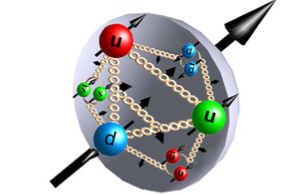
Abstract: In 1987, the European Muon Collaboration discovered that quark spins account for only a fraction of the proton's total spin. Nearly four decades later, the proton spin decomposition is still an unsolved puzzle. One key piece of that puzzle is how a quark's transverse momentum correlates with the spin of the proton carrying it — a relationship captured by transverse-momentum-dependent parton distributions, and in particular by the Sivers function. The Sivers function of sea antiquarks remains especially poorly known.
SpinQuest (E1039), running in the fixed-target beamlines at Fermilab, is built to close that gap. It measures transverse single-spin asymmetries in polarized Drell-Yan scattering: a 120 GeV unpolarized proton beam striking a transversely polarized ammonia (NH₃) or deuterated-ammonia (ND₃) target. At forward rapidity, Drell-Yan production is uniquely sensitive to the antiquark content of the polarized target — giving a clean, direct handle on the antiquark Sivers function that semi-inclusive DIS can't offer, since quark and antiquark contributions are tangled together there.
Extracting that signal is an apparatus challenge as much as a physics one. Sustaining high, stable polarization under highbeam intensity requires a cryogenic target held near 1 Kelvin in a 5 Tesla field, with radiation damage continuously repaired through target annealing. This talk covers the physics motivation behind SpinQuest, the experimental setup — especially the polarized target system — and first-stage results on the transverse single-spin asymmetry in J/ψ production.
Click here for 2025 - 2026 season
2026-2027 Committee
Anatoli Afanasjev (325-2918, aa242-at-msstate.edu email)
Lamiaa El Fassi (Chair) (325-0627, le334-at-msstate.edu email)
Seong-Gon Kim (325-8031, sk162-at-msstate.edu email)
Donna Pierce (325-2914, dmp149-at-msstate.edu email) Prabhakar Pradhan (325-6626, pp838-at-msstate.edu email)
Jaspreet Randhawa (325-2688, jsr512-at-msstate.edu email)
Chuji Wang (325-9455, cw175-at-msstate.edu email)
Secretary: Tracy Wilcox (325-2159, tld25-at-msstate.edu email)